NOW APPROVED


For APPs and RNs
Resources and detailed information for APPs and RNs, including dosing, dose modifications, and prophylaxis, to help you care for patients who are prescribed RASONQUE.
Resources for your team and your patients
Dosing & Adverse Reaction Management Guide
Find detailed prophylaxis recommendations, dose management, and patient education resources for the most common ARs of RASONQUE.
Dermatologic Reactions Management Guide
Information about dermatologic reactions associated with RASONQUE and their management
2 tablets taken orally, once daily1

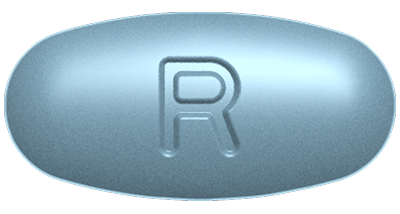
- Recommended dosage: 300 mg (two 150-mg tablets)

- Tablets should be swallowed whole. They should not be chewed, crushed, or split

- If a dose is missed for more than 4 hours, skip the missed dose, and take the next dose at the next regularly scheduled time
- If vomiting occurs after taking the dose, do not take an additional dose. Resume dosing at the next regularly scheduled time
- RASONQUE is available as 150-mg and 100-mg tablets
Summary of prophylactic measures and patient education
Discussing prophylaxis and ARs with patients and caregivers is an important first step in their treatment with RASONQUE
Dermatologic reactions: Profile and incidence
Monitoring and onset in RASolute 302*
- Safety assessments for patients receiving RASONQUE were performed every 2 weeks and as clinically indicated3
Profile
-
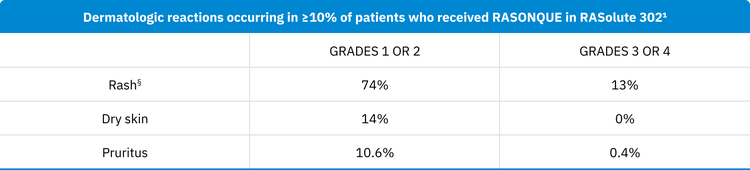
Rash is a common, expected side effect that was seen in patients treated with RASONQUE from the RASolute 302 trial1
- The majority of cases were Grade 1 or Grade 2 in severity
-
It is typically an acneiform rash2
-
In clinical trials of patients with pancreatic adenocarinoma1†:
- Median time to first onset of dermatologic toxicity was 13 days (range: 1 to 106 days)
- Median time to improvement of dermatologic toxicity from Grade 3 to Grade 1 or resolution was 16 days (range: 8 to 218 days)
Rash of any grade occurred in 87% of patients in RASolute 3021‡
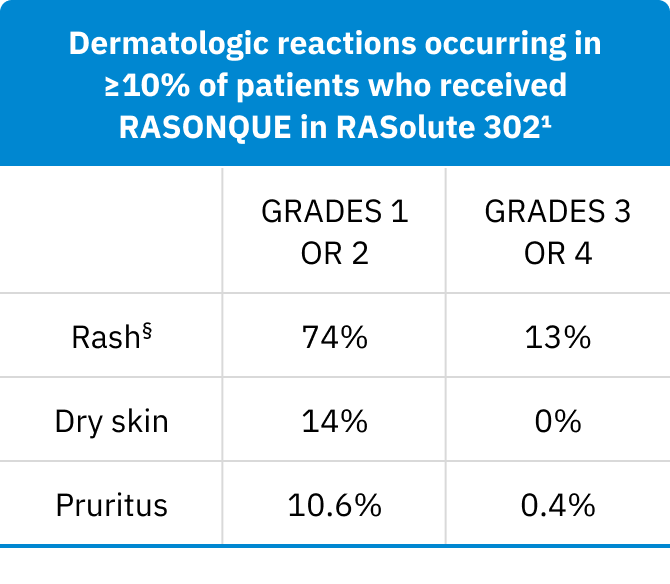
Dose interruptions, modifications, and permanent discontinuations in patients who received RASONQUE in RASolute 3021
- Dose interruptions in ≥5% of patients: 27% due to rash1
- Dose reductions in ≥5% of patients: 18% due to rash1
- Permanent discontinuations in 2.9% of patients: 0.8% due to rash1
*Prophylaxis for dermatologic reaactions was recommended but not required in RASolute 302.3
†The pooled safety population of RASONQUE reflects exposure to RASONQUE 300 mg once daily in 241 patients with pancreatic adenocarcinoma enrolled in RASolute 302 and 184 patients with pancreatic adenocarcinoma enrolled in the open‑label trial RMC-6236-001.1
‡Graded per NCI CTCAE Version 5.0.1
§Includes multiple related terms.1
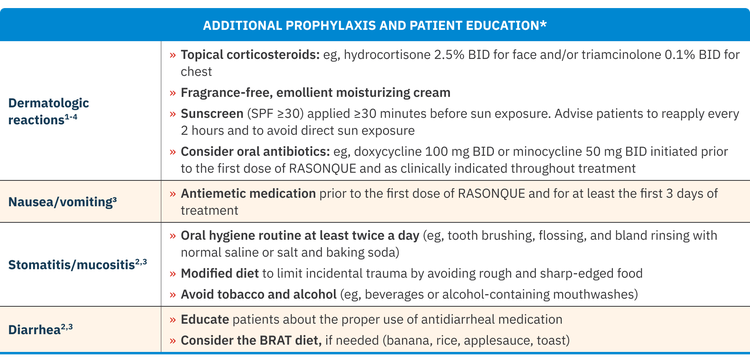
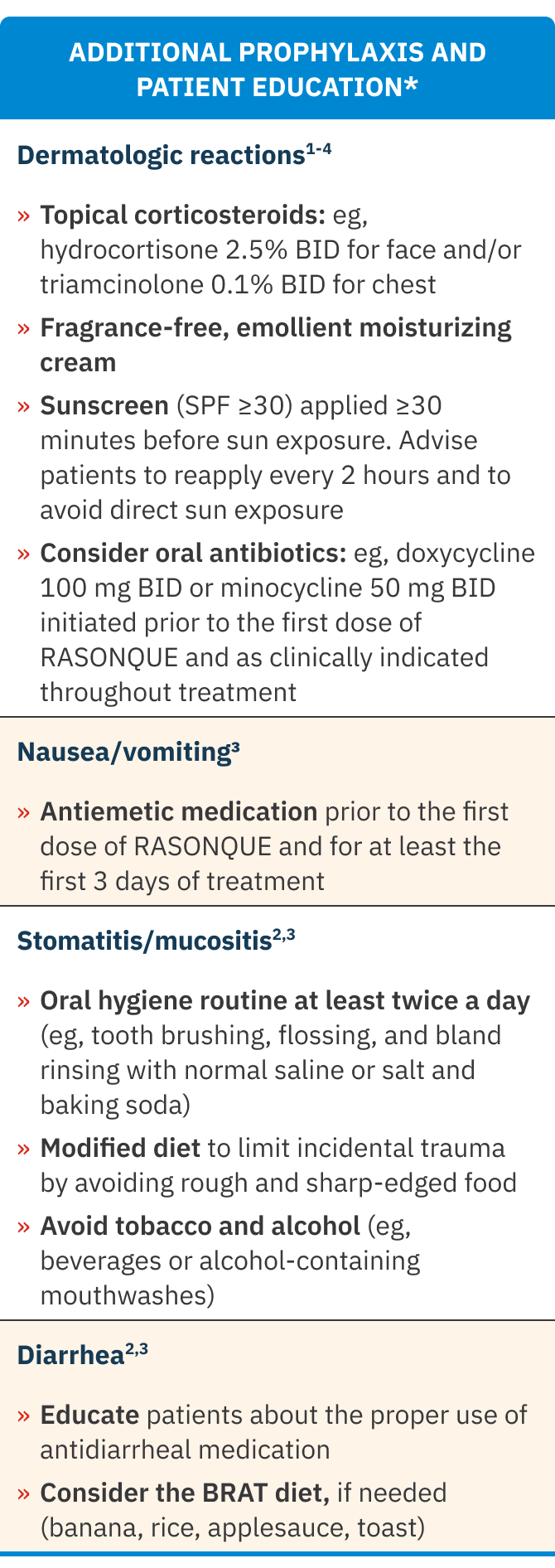
Initiate prophylactic measures prior to the first dose to reduce the risk of moderate to severe dermatologic reactions1
Prophylactic and proactive dermatologic reaction management is important to support patients1

Topical corticosteroids1-3
- Face: eg, hydrocortisone 2.5% BID
- Chest: eg, triamcinolone 0.1% BID

Emollient cream1-3
- Fragrance-free, emollient moisturizing cream

Sunscreen1-4
- SPF ≥30 applied ≥30 minutes before sun exposure. Advise patients to reapply every 2 hours

Oral antibiotics1-3
Consider:
- Eg, doxycycline 100 mg BID or minocycline 50 mg BID
- Initiate prior to first dose of RASONQUE and as clinically indicated throughout treatment

Skin hygiene6
- Keep skin clean with mild soap
- Avoid hot water
- Gently pat skin dry
- Consider an OTC antiseptic spray (eg, hypochlorous acid; AM/PM)

Clothing and toiletries6
- Wear loose, soft, comfortable clothing
- Avoid strong perfumes or irritating chemicals

Self-check6
- Perform full-body exams frequently to monitor for new or worsening reactions

Sun protection1,2,5
- Avoid direct sun exposure
- Use sunscreen that is SPF ≥30, applied ≥30 minutes before sun exposure
- Wear protective clothing, hats, and gloves
Additional resources are available to help manage dermatologic reactions
- Dermatologic Reactions Management Guide
- Dosing & Adverse Reaction Management Guide
Stomatitis/mucositis
Profile
-
In clinical trials of patients with pancreatic adenocarinoma1*:
- Median time to first onset of stomatitis was 22 days (range: 1 to 343 days)
- Median time to improvement of stomatitis from Grade ≥3 to Grade 1 or resolution was 12 days (range: 1 to 127 days)1

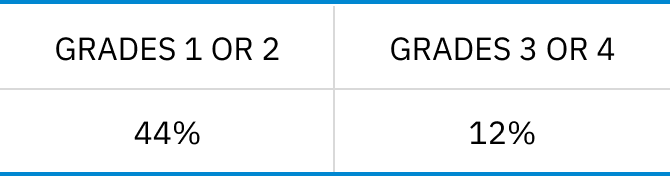
Dose modifications and permanent discontinuations in patients who received RASONQUE:
- Dose interruptions in ≥5% of patients: 20% due to stomatitis1
- Dose reductions in ≥5% of patients: 8% due to stomatitis1
Patient education

Oral hygiene2,3,9
- Brush and floss at least twice a day
- Use a saline (salt water) rinse
- Avoid mouthwashes with alcohol
Consider§:
- Keeping lips moisturized with a lip balm
- Using a soft-bristled toothbrush

Diet2,3,9,10
- Avoid rough and sharp foods
Consider§:
- Avoiding foods that are hot in temperature
- Avoiding acidic fruits and juices
- Eating chilled foods and drinking chilled fluids
- Eating soft foods that are not too dry and are easy to swallow

Lifestyle2,3
- Avoid alcohol and tobacco
*The pooled safety population of RASONQUE reflects exposure to RASONQUE 300 mg once daily in 241 patients with pancreatic adenocarcinoma enrolled in RASolute 302 and 184 patients with pancreatic adenocarcinoma enrolled in the open‑label trial RMC-6236-001.1
†Graded per NCI CTCAE Version 5.0.1
‡Prophylaxis was recommended but not required in RASolute 302.3
§These recommendations are adapted from the American Cancer Society.
Diarrhea
Profile
-
In clinical trials of patients with pancreatic adenocarinoma1*:
- Median time to first onset of diarrhea was 3 days (range: 1 to 260 days)
- Median time to improvement of diarrhea from Grade ≥3 to Grade 1 or resolution was 3 days (range: 1 to 21 days)1

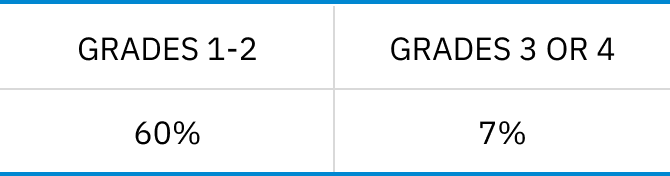
Serious AR, dose interruption, and dose reduction rates in patients who received RASONQUE1
- Serious ARs in ≥2% of patients: 3.7% due to diarrhea1
- Dose interruptions in ≥5% of patients: 8% due to diarrhea1
- Dose reductions in ≥5% of patients: 5% due to diarrhea1
Patient education‡

Management and reporting2,3,11,12
- Educate patients on the proper use of antidiarrheal medication
Consider§:
- Encouraging patients to keep track of how often diarrhea occurs
- Pancreatic enzyme replacement therapy, as clinically indicated
Modified diet2,3,11
- Consider the BRAT diet if needed (banana, rice, applesauce, toast)
Consider encouraging patients to§:
- Drink plenty of water and fluids to replace electrolytes
- Eat small meals throughout the day
- Eat foods that are high in sodium and potassium
Consider avoiding11
- High-fiber foods
- Food and drinks that can make diarrhea worse, like alcohol, dairy, spicy foods, and caffeine
*The pooled safety population of RASONQUE reflects exposure to RASONQUE 300 mg once daily in 241 patients with pancreatic adenocarcinoma enrolled in RASolute 302 and 184 patients with pancreatic adenocarcinoma enrolled in the open‑label trial RMC-6236-001.1
†Graded per NCI CTCAE Version 5.0.1
‡Prophylaxis was recommended but not required in RASolute 302.3
§These recommendations are adapted from the National Cancer Institute.