NOW APPROVED
Safety
The majority of adverse reactions in patients who received RASONQUE (daraxonrasib) were Grade 1 or 21
<3% of patients discontinued RASONQUE due to adverse reactions (ARs)1*
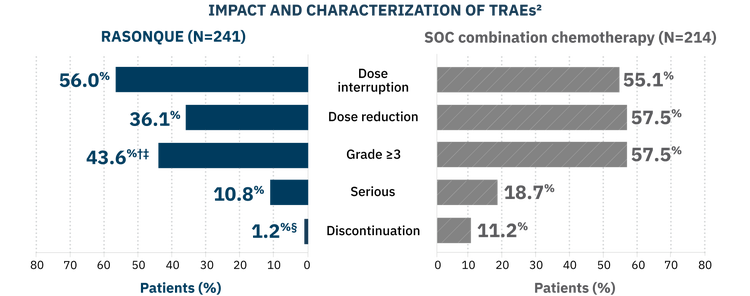
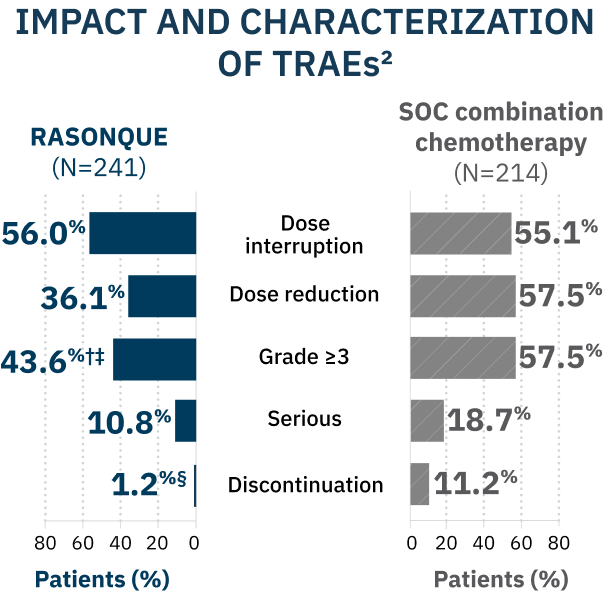
Patients had lower rates of TRAE-related dose modifications with RASONQUE (56.8%) vs SOC combination chemotherapy (71.5%)2
- The majority of dose modifications due to TRAEs for RASONQUE were dose interruptions rather than dose reductions

- The median dose intensity in patients who received RASONQUE was 93.1% vs 65% to 95% across SOC combination chemotherapy regimens2
*Adverse reactions leading to permanent discontinuation of RASONQUE occurred in 2.9% of patients, including 2 patients (0.8%) who discontinued due to maculo-papular rash.1
†Three patients (1.2%) who received RASONQUE had Grade 4 TRAEs: an increased AST level in 2 patients and a decreased platelet count in 1 patient.2
‡One patient had a Grade 5 event of interstitial lung disease/pneumonitis.1
§Two patients had a maculopapular rash of Grade 3, and 1 patient had an increased ALT level of Grade 3 and an increased AST level of Grade 4.2
The majority of ARs in patients who received RASONQUE were Grade 1 or 21
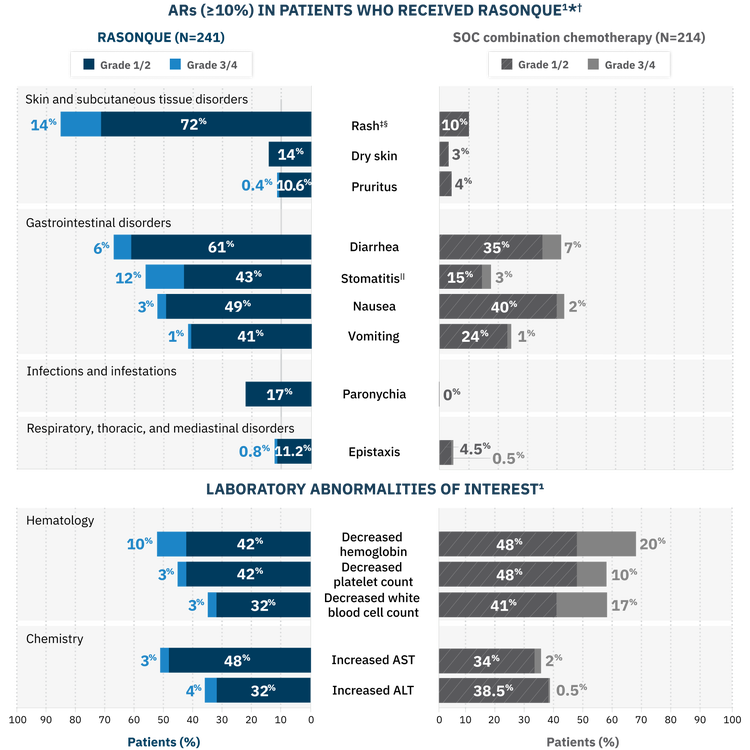
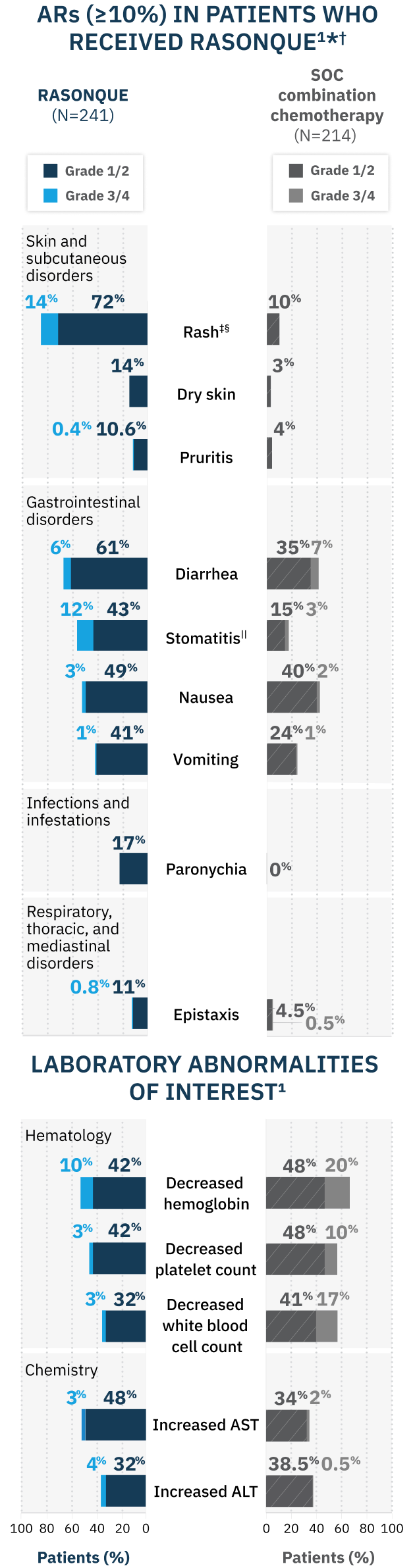
- Median duration of treatment: 6.2 months with RASONQUE and 1.5-3.2 months across chemotherapy regimens1
*Per National Cancer Institute Common Terminology Criteria for Adverse Events (NCI CTCAE) v5.0.1
†Safety assessments for patients receiving RASONQUE were performed every 2 weeks or more frequently at the investigator’s discretion.3
‡Prophylaxis guidelines are available to help support rash management.
§Rash includes acne, butterfly rash, dermatitis, dermatitis acneiform, eczema, hand dermatitis, rash, rash erythematous, rash macular, rash maculo-papular, rash papular, rash pruritic, and skin ulcer.1
||Stomatitis includes aphthous ulcer, mucosal inflammation, mucosal ulceration, and stomatitis.1
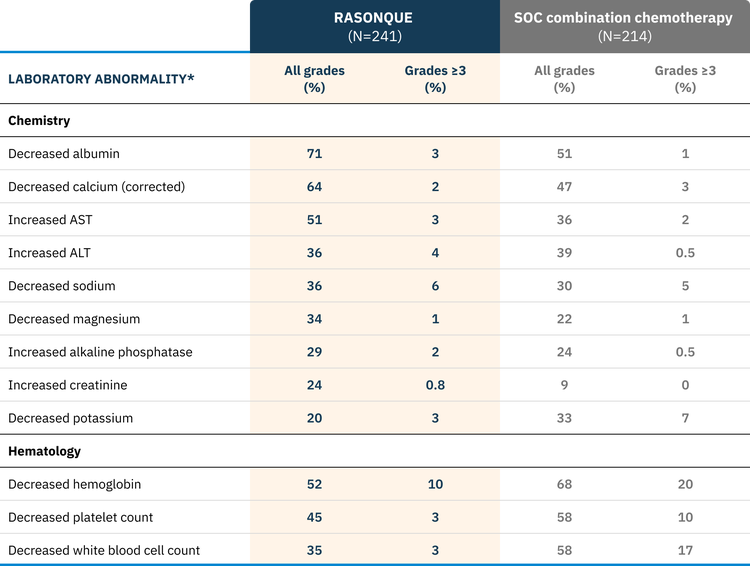
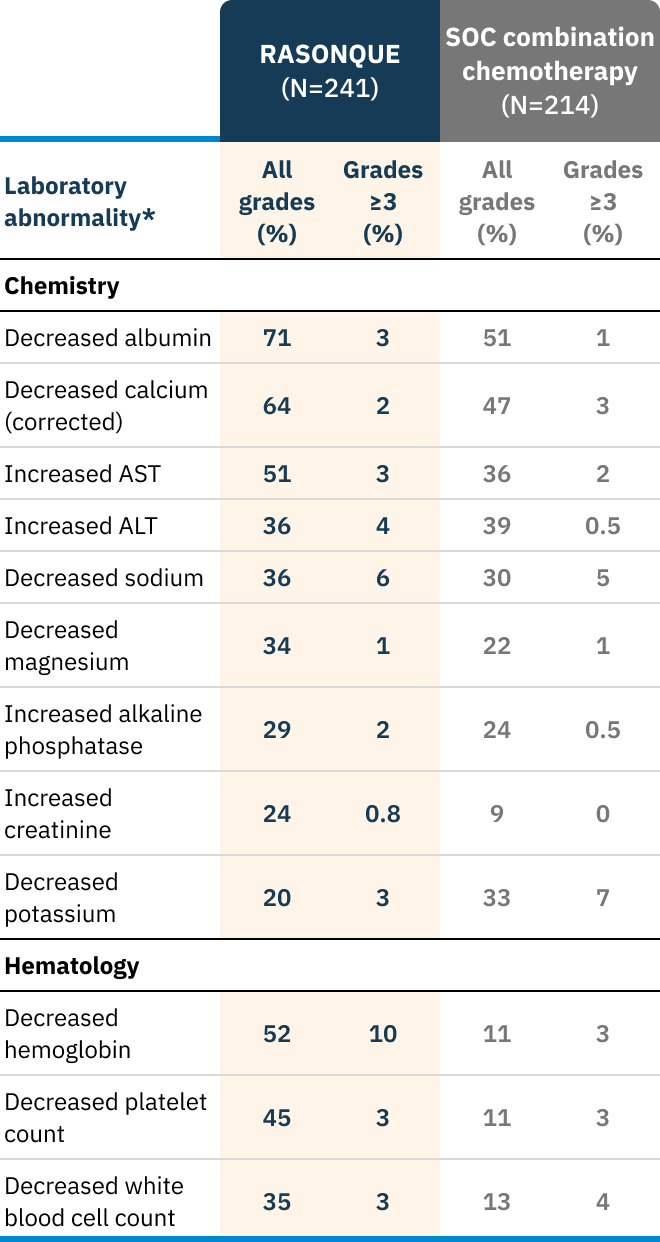
Laboratory abnormalities1
LABORATORY ABNORMALITIES (≥20%) THAT WORSENED FROM BASELINE IN PATIENTS WHO RECEIVED RASONQUE