NOW APPROVED


Trial design
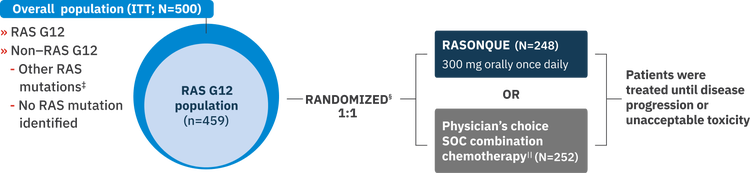
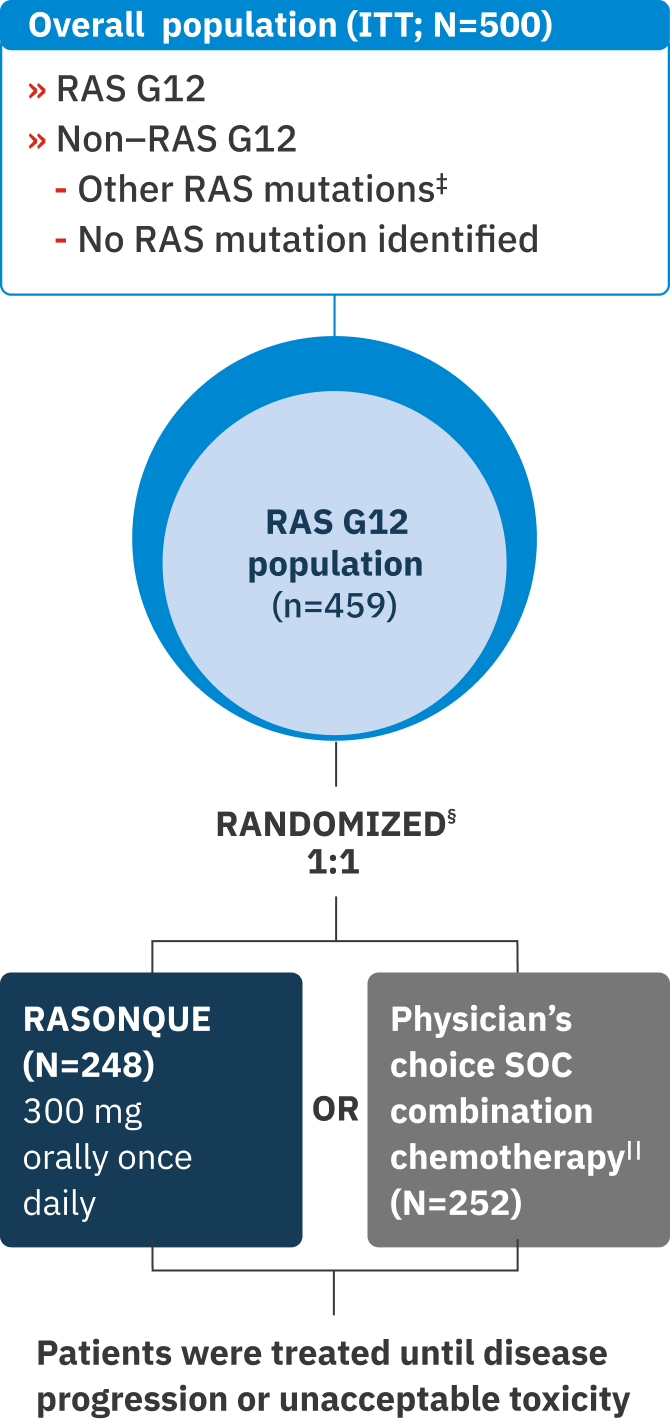
RASolute 302 was a Phase 3 trial evaluating the efficacy and safety of RASONQUE monotherapy vs SOC combination chemotherapy.1,2
RASolute 302: Evaluating the first and only approved RAS(ON) multi-selective inhibitor vs SOC combination chemotherapy1
- Confirmed metastatic pancreatic adenocarcinoma
- Confirmed RAS status*
- Disease progression after 1 previous line of systemic therapy†
- ECOG PS of 0 or 1
- Known CNS metastases
- Previous RAS-targeted therapy
- Overall survival (OS)
- Progression-free survival (PFS)¶
- OS
- PFS¶
-
Objective response rate (ORR)#
-
Safety, including adverse reactions (ARs)
-
Time to response (TTR)#
-
Patient-reported outcomes (PROs)**
- Time to deterioration (TTD) in pain
- TTD in global health status
*RAS mutation status was determined by a locally available test using archival tumor DNA extracted from plasma specimens.1
†A fluoropyrimidine-based or gemcitabine-based regimen in the metastatic setting or in the neoadjuvant or adjuvant setting if metastatic disease was diagnosed <6 months after the last dose.2
‡Included KRAS, NRAS, and HRAS mutations at positions G13 or Q61.2
§Randomization was stratified by RAS mutation status (RAS G12D/V mutation, other RAS G12 mutation, or RAS G13 or Q61 mutation or no RAS mutation identified), liver metastases at baseline (present or absent), and ECOG PS at baseline (0 or 1).2
||SOC combination chemotherapy included mFOLFIRINOX, gemcitabine + nab-paclitaxel, FOLFOX, or liposomal irinotecan + 5-FU/leucovorin.1
¶Per RECIST v1.1, as assessed by BICR.2
#As assessed by BICR and by the investigator.3
**Defined as TTD as assessed on the basis of pain (time to an increase of ≥10 points from baseline in score on the EORTC QLQ-PAN26 pain scale or death, whichever occurred first) and TTD as assessed on the basis of global health status–QoL (time to a decrease of ≥10 points from baseline in score on the EORTC QLQ-C30 global health status–QoL scale or death, whichever occurred first) in the RAS G12 and overall populations.2
Patient characteristics were balanced across treatment arms2
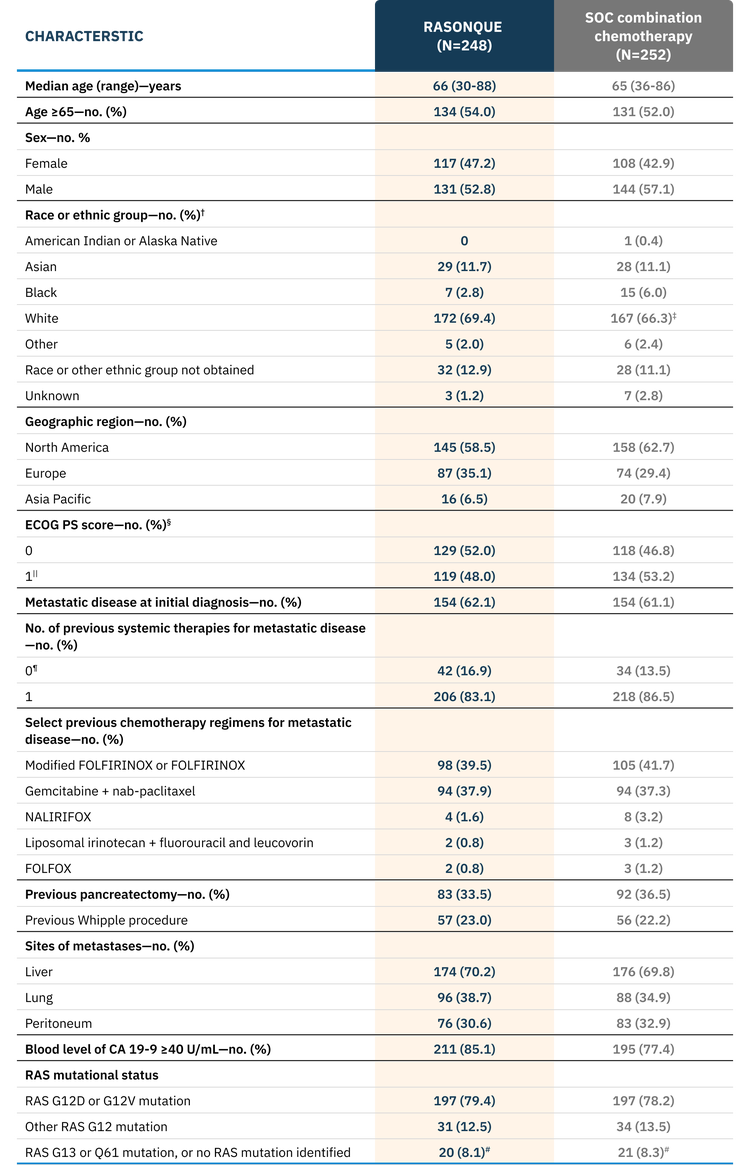

*The overall population was comprised of patients whose tumors harbored RAS mutations at G12, G13, or Q61, or patients in whom no RAS mutation was identified. Percentages may not total 100 because of rounding.2
†Race and ethnic group were reported by the patients.2
‡The number of patients includes 1 patient whose race was documented as White and Asian.2
§ECOG PS scores range from 0 to 5, with higher scores indicating greater disability.2
||Three patients (2 randomly assigned to the RASONQUE group and 1 to the chemotherapy group) had an ECOG PS score higher than 1 at baseline; therefore, these patients no longer met the trial eligibility criteria and received no doses of the trial treatment.2
¶This category includes 42 patients (16.9%) in the RASONQUE group and 33 patients (13.1%) in the chemotherapy group who received previous treatment in the context of neoadjuvant or adjuvant disease but progressed to metastatic disease <6 months after the last dose of such therapy. One patient with a diagnosis of metastatic disease had a line of therapy that was incorrectly categorized as treatment for locally advanced disease.2
#Nine patients (3.6%) in the RASONQUE group and 7 patients (2.8%) in the SOC combination chemotherapy group had no identified RAS mutation. Eleven patients (4.4%) had RAS mutations at locations other than G12 (G13 and Q61) in the RASONQUE arm.2