NOW APPROVED
Safety
The majority of adverse reactions in patients who received RASONQUE were Grade 1 or 21
<3% of patients discontinued RASONQUE due to adverse reactions (ARs)1*
Patients had lower rates of TRAE-related dose modifications with RASONQUE (56.8%) vs SOC combination chemotherapy (71.5%)2
- The majority of dose modifications due to TRAEs for RASONQUE were dose interruptions rather than dose reductions2

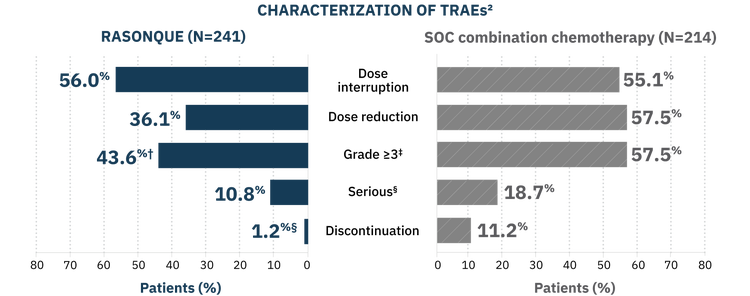
- The median dose intensity in patients who received RASONQUE was 93.1% vs 65% to 95% across SOC combination chemotherapy regimens2
The FDA defines ARs as any undesirable effects reasonably associated with use of a drug. TRAEs, however, were investigator-assessed as related to use of a drug. As a result, there may be discrepancies in the values reported for ARs and TRAEs.3,4
*ARs leading to permanent discontinuation of RASONQUE occurred in 2.9% of patients, including 2 patients who discontinued due to rash (0.8%).1
†Three patients (1.2%) who received RASONQUE had Grade 4 TRAEs: an increased AST level in 2 patients and a decreased platelet count in 1 patient.2
‡In clinical trials of patients with metastatic pancreatic adenocarcinoma, 1 patient who received RASONQUE had a Grade 5 event of interstitial lung disease (ILD)/pneumonitis and 1 patient who received RASONQUE had a Grade 5 event of GI perforation.1
§Serious is defined as resulting in death, being life threatening, requiring inpatient hospitalization or prolongation of existing hospitalization, resulting in persistent or significant disability/incapacity, a congenital anomaly/birth defect, or deemed serious by medical judgment.3
llTwo patients had a maculo-papular rash of Grade 3, and 1 patient had an increased ALT level of Grade 3 and an increased AST level of Grade 4.2
The majority of ARs in patients who received RASONQUE were Grade 1 or 21
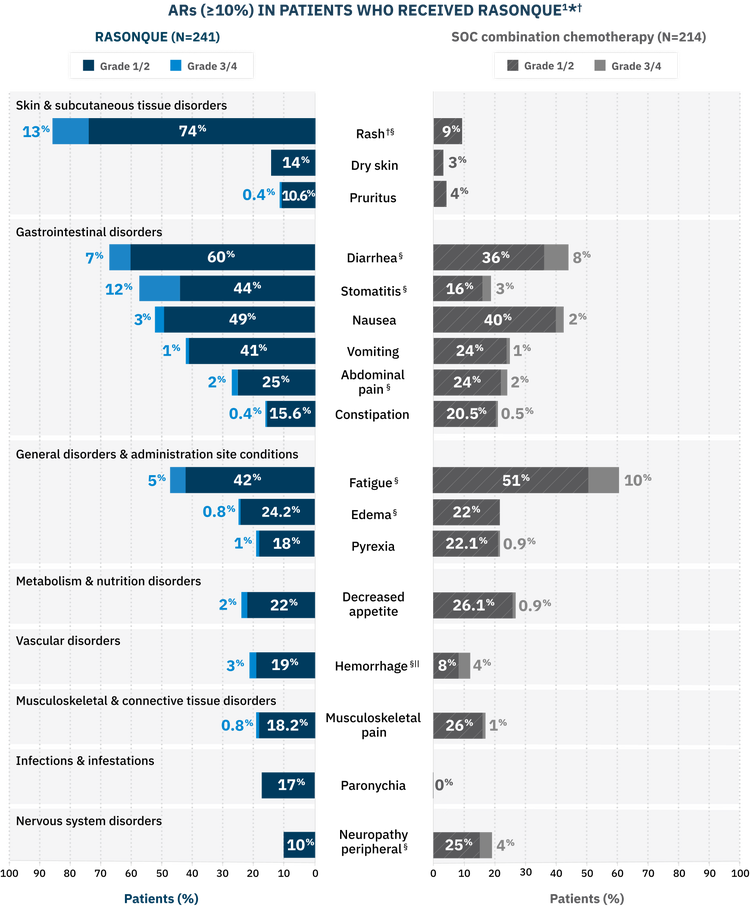
- Other clinically important ARs occurring in <10% of patients who received RASONQUE in RASolute 302 included renal-limited thrombotic microangiopathy (0.4%).1
- Median duration of treatment: 6.2 months with RASONQUE and 1.5-3.2 months across chemotherapy regimens2
*Graded per National Cancer Institute Common Terminology Criteria for Adverse Events (NCI CTCAE) Version 5.0.1
†Safety assessments for patients receiving RASONQUE were performed every 2 weeks or more frequently at the investigator’s discretion.3
‡Prophylaxis guidelines are available to help support rash management.
§Includes multiple related terms.1
||Hemorrhage consists of multiple related terms. In the RASONQUE arm of RASolute 302, 22% of patients experienced hemorrhage of any grade. 9.5% of hemorrhage was Grade 1 epistaxis. Grade 3 or higher GI hemorrhage events were reported in 6/241 (2.5%) of patients total: gastric (n=1), GI (n=2), rectal (n=1), and small intestinal (n=2). No CNS hemorrhages were reported in the RASONQUE arm of the study.5
Laboratory abnormalities1
SELECT LABORATORY ABNORMALITIES (≥20%) THAT WORSENED FROM BASELINE IN PATIENTS WHO RECEIVED RASONQUE*
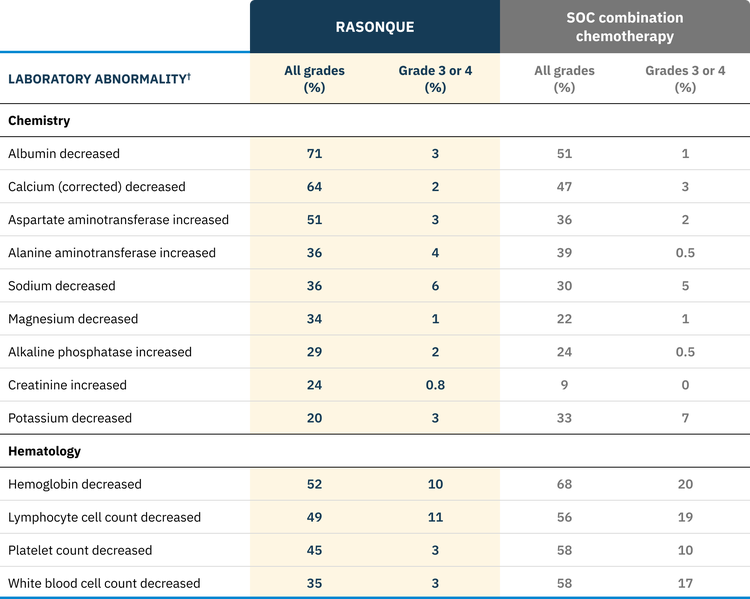
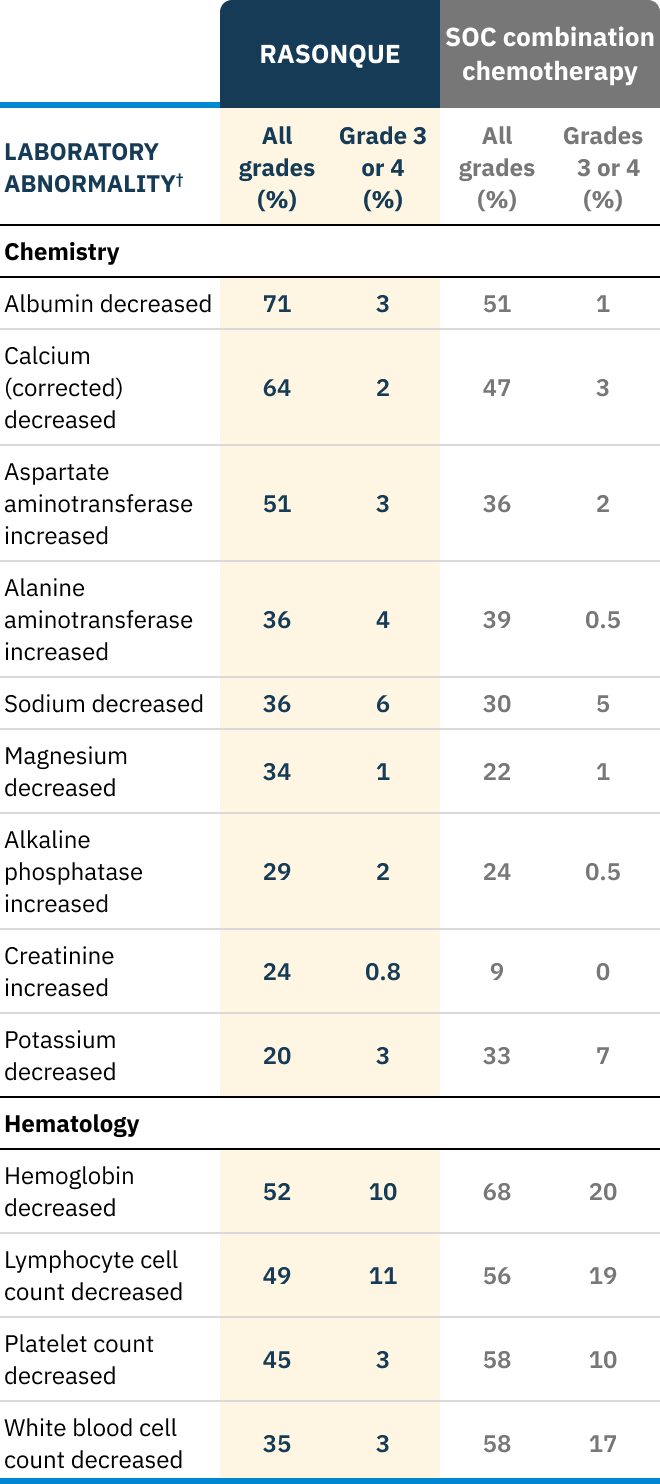
*The denominator used to calculate the percentage varied from 234 to 237 in the RASONQUE arm and from 207 to 208 in the SOC chemotherapy arm, based on the number of patients with a baseline value and at least one post-baseline value.1
†Graded per NCI CTCAE Version 5.0.1