NOW APPROVED


RASONQUE mechanism of action
RASONQUE is a RAS(ON) multi-selective inhibitor that targets the key driver of oncogenesis in metastatic pancreatic adenocarcinoma with a novel inhibitory tri-complex approach.1-3
RASONQUE is the first and only approved RAS(ON) multi-selective inhibitor1*

In pancreatic cancer cells, RAS(ON) is the dominant oncogenic driver, making it an ideal therapeutic target2,3
- Preclinical studies demonstrated that RASONQUE can bind to both wild-type† and mutant RAS(ON) proteins1‡
RASONQUE drives the formation of a novel inhibitory tri-complex with a chaperone protein and RAS(ON)1,4

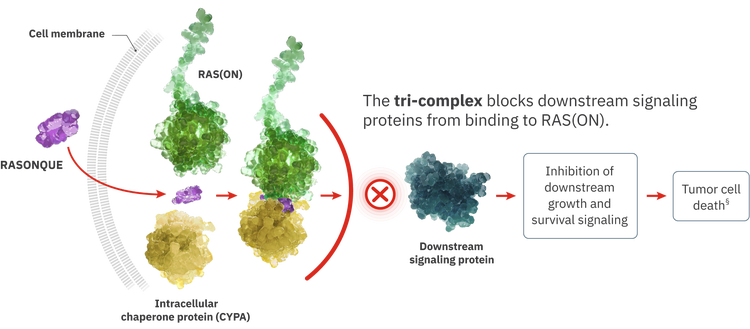
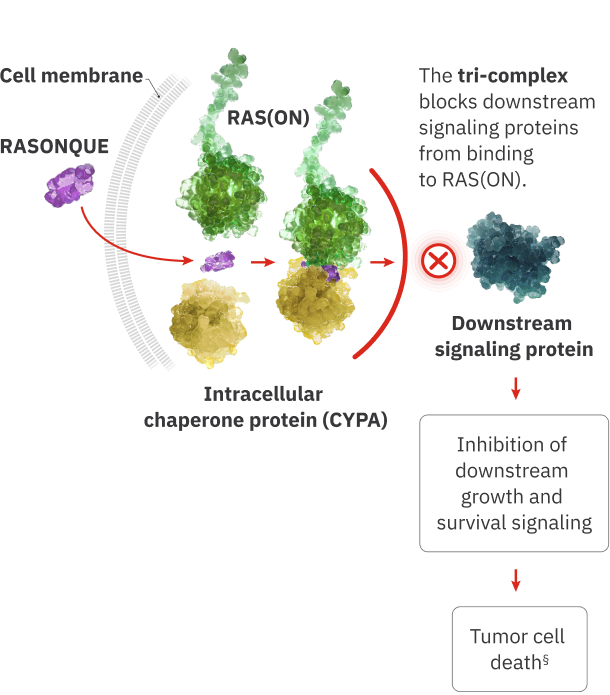
*RASONQUE is an inhibitor of the RAS GTPase family. RASONQUE binds to cyclophilin A, resulting in a binary complex that binds to the active, GTP-bound state of RAS.1
†Wild-type RAS may also play a role in oncogenesis, as many cases of PDAC with wild-type RAS have alterations in other members of the RAS-MAPK pathway.2
‡Binds RAS(ON) across wild-type and mutant variants, including those with mutations at positions G12, G13, and Q61 in KRAS, NRAS, and HRAS.1,2
§Preclinical studies demonstrated that inhibiting oncogenic RAS signaling with RASONQUE induces tumor cell death.1
RAS(ON) is the key oncogenic driver of pancreatic adenocarcinoma2

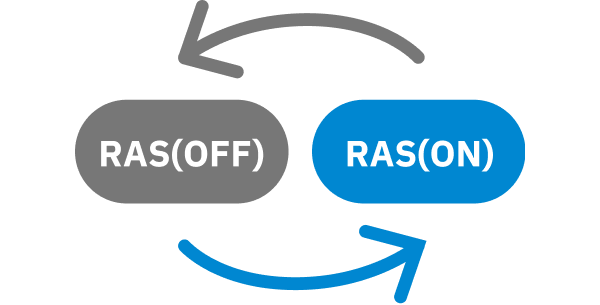
RAS proteins function as tightly regulated molecular switches that cycle between the inactive RAS(OFF) state and the active RAS(ON) state5-8

RAS mutations lead to an accumulation of RAS(ON) proteins, causing excessive RAS(ON) signaling3,5,6,8-11
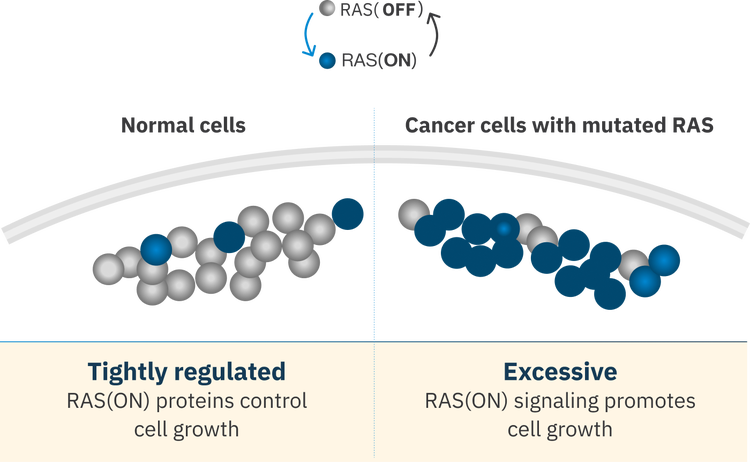
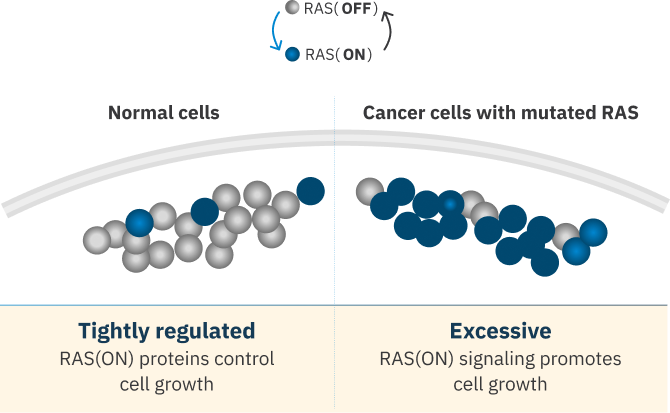
- RAS(ON) activates cell signaling pathways, such as MAPK and PI3K, that promote cell growth, survival, and proliferation5,7,12
- Excessive RAS(ON) signaling can cause uncontrolled cell proliferation and survival, which can drive cancer initiation and progression3,10,11